5 Hidden Features of the Medion Erazer Deputy 15 P1 You Must Know About
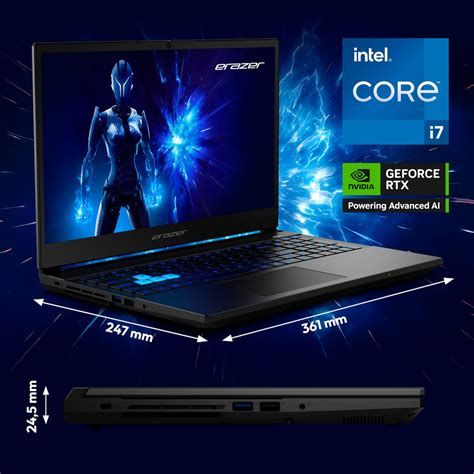
The Medion Erazer Deputy 15 P1 positions itself as a competitively priced 15-inch machine aimed at gamers and power users who want strong performance without an oversized footprint. Beyond the headline specs that shoppers tend to read (processor, GPU, RAM and storage), the Deputy 15 P1 hides a set of practical features that materially affect daily use: upgrade options, thermal and power controls, graphics routing, keyboard flexibility and battery-health tools. This article walks through five of those underappreciated capabilities, explains why they matter in real-world scenarios, and helps prospective buyers decide if the Deputy 15 P1 is the right fit.
Who should read this
This article is for buyers who consider the Deputy 15 P1 for gaming, streaming, content creation or as a power-packed portable workstation. It’s also useful for owners who want to extract more lifespan and performance from the machine through upgrades and software tuning. Each feature explanation includes practical use cases and short how-tos so readers can enable or verify the capability quickly.
Quick overview: what buyers typically care about
When evaluating a 15-inch gaming laptop, buyers usually focus on a handful of tangible concerns:
- Performance vs. thermals: Can the chassis sustain high CPU/GPU loads without throttling?
- Upgradeability: Is RAM and storage easy to expand later?
- Battery life and portability: How far can the laptop go unplugged?
- Display quality: Refresh rate, color and brightness for gaming and creation.
- Input and customization: Keyboard feel, macro keys, and lighting control.
The Deputy 15 P1 addresses these core concerns, but several of its most impactful options are not obvious at a glance. The sections below unpack those hidden features and show how they change the ownership experience.
5 Hidden Features Explained (and how to use them)
1. Service-friendly upgradeability: dual SODIMM and additional M.2 slot
One of the most valuable hidden advantages in a mid-range gaming laptop is how easy it is to upgrade later. The Deputy 15 P1 commonly exposes both memory SODIMM slots and a spare M.2 slot under a single bottom panel—meaning buyers can start with an economical configuration and upgrade RAM or add NVMe storage down the road.
Real-world use case: a gamer who buys a base model with 8GB or 16GB of RAM can add a second RAM stick when running modern titles or streaming, instead of replacing the whole machine. Content creators can add a second high-capacity NVMe drive to keep projects local without relying on external drives.
How to check or perform the upgrade: power down, disconnect power, remove the bottom access cover (small Phillips screws), and look for labeled SODIMM slots and M.2 sockets. If uncertain, consult the service manual or the manufacturer’s quick start guide for the correct RAM and NVMe specifications before purchasing modules.
2. Tunable thermal and power profiles via preinstalled utilities and firmware
The Deputy 15 P1 often includes a vendor utility or BIOS options that let users choose between silent, balanced and performance thermal profiles. These profiles adjust fan curves, CPU power limits and sometimes GPU behaviour to prioritize temperature, noise, or raw performance.
Real-world use case: when streaming or recording gameplay, choosing a more aggressive thermals/performance profile preserves frame rates. Conversely, when working in a quiet environment—such as a library or during travel—the silent profile keeps fan noise low while preserving decent battery life.
Looking for the best Laptops & Computers deals on Amazon?
Browse Now →How to use it: look for a system utility (sometimes branded Erazer Control Center or similar) in Windows. If a control app is not present, similar options are often available in the UEFI/BIOS under thermal or performance settings. Users should benchmark briefly after switching to ensure the chosen profile delivers the expected trade-offs.
3. Graphics routing options—hybrid graphics vs discrete-only mode (MUX-like behavior)
Many buyers overlook how a laptop routes display output between the integrated GPU and a discrete GPU. The Deputy 15 P1 frequently supports configurable graphics modes that let the discrete GPU drive the panel directly (reducing latency and improving peak frame rates) or use hybrid/Optimus-style switching to favor battery and compatibility.
Real-world use case: competitive gamers who need every millisecond will prefer the discrete-only routing to cut latency and maximize sustained frame rates. Conversely, everyday users and those who prioritize battery life will keep hybrid switching enabled so the system automatically balances power draw.
How to enable or confirm: this option may appear in the BIOS as a display or graphics routing setting or inside the system utility. When enabled, run a GPU benchmark and note lower frame-times and slightly higher power draw in discrete-only mode. If the setting is absent in firmware, equivalent benefits can sometimes be achieved by enabling a “high-performance” profile in the vendor utility or by selecting the discrete GPU as the preferred adapter for specific games in the GPU driver control panel.
4. Onboard keyboard macros and lighting profiles stored in firmware
Beyond basic backlighting, the Deputy 15 P1 frequently offers multi-zone RGB control, onboard macro storage and hardware-level profiles. That means custom key bindings and lighting schemes persist across operating system installs or when the laptop is used in tournament environments where third-party apps are restricted.
Real-world use case: streamers can map scene-switch keys and lighting transitions to a macro row, while competitive players can have a low-latency lighting profile and game-specific key binds accessible without launching additional software.
How to customize: open the preinstalled keyboard or lighting utility and explore profile, macro and export/import options. If the laptop supports onboard profile storage, users can export a profile to internal memory and recall it through a hotkey combination even after a clean OS reinstall.
5. Battery care and preservation tools: charge thresholds and calibration
Battery longevity is something buyers sometimes ignore until capacity declines. The Deputy 15 P1 commonly includes battery charge limit settings (also called preservation mode) that let the user cap maximum charge at ~80% to slow chemical aging and extend usable lifespan. It may also include diagnostic or calibration tools in firmware.
Real-world use case: users who keep their laptop docked for long working sessions can set a charge threshold to avoid the constant 100% charge cycle that accelerates battery wear. Travelers who need maximum daily range can temporarily disable the threshold for a full charge before a flight.
Find top-rated Laptops & Computers products at great prices.
See Deals →How to enable: check the system utility or BIOS for battery health/charging options. Set a preservation mode (for example, 60–80% maximum) when the machine is primarily plugged in. Periodically run a calibration routine if provided to keep the battery meter accurate.
Detailed review and analysis
Beyond the hidden features above, the Deputy 15 P1 delivers a package that balances affordability and capability. The chassis offers a usable blend of portability and cooling—making it suitable for longer sessions at a desk and for transport between home and campus or office. Buyers who prioritize repairability and future upgrades will appreciate the accessible internal layout; the presence of additional expansion slots makes the machine adaptable as needs change.
Performance in sustained workloads depends heavily on which thermal/power profile is selected. With an aggressive performance profile and good cooling paste/application, the CPU and GPU can sustain strong throughput for gaming, streaming, and export tasks. Under quieter profiles the system trades off peak frequency for lower temperatures and noise, which is a practical compromise for mixed-use scenarios.
Key real-world considerations:
- Thermals: The Deputy 15 P1’s cooling is competent for the class, but sealing hardware upgrades like faster NVMe drives in the main bay can produce additional heat—plan thermal management accordingly.
- Display: The panel choices emphasize high refresh rates on many configurations. For color-critical work, consider calibrating the display or choosing a configuration with better color accuracy if available.
- Port selection: Typical mid-range gaming laptop port arrays are present—multiple USB-A, at least one USB-C with display capabilities on some units, Ethernet, and an audio jack—making the laptop flexible for peripherals and external displays.
- Software: The vendor utility adds useful controls but also adds background services. Users who prefer minimal software should identify and disable only the services they don’t need while keeping the performance and battery tools available.
Pros & Cons
- Pros:
- Service-friendly access and upgrade paths for RAM and storage
- Tunable thermal and power profiles give a wide range of operating envelopes
- Graphics routing options can favor low-latency gaming or battery efficiency
- Onboard keyboard macros and lighting profiles persist across OS changes
- Battery-health tools help prolong long-term capacity
- Cons:
- Vendor utilities are useful but can be intrusive if not managed
- Performance depends on selected profile—out-of-the-box behavior may not be optimal for all users
- Display color accuracy varies by configuration; professionals may need calibration or a higher-end panel
- While upgradeable, some components (GPU, CPU) remain fixed—buyers should choose a CPU/GPU spec aligned with long-term needs
How the Deputy 15 P1 compares to common alternatives
| Feature | Medion Erazer Deputy 15 P1 | Typical 15" Gaming Laptop | Ultraportable 15" Laptop |
|---|---|---|---|
| Upgradeability (RAM/Storage) | High — accessible SODIMM and spare M.2 slot in most configurations | Varies — many are soldered or limited; some are upgrade-friendly | Low — often soldered RAM and single storage slot |
| Thermal control & profiles | Robust — multiple profiles and BIOS options | Moderate — usually manufacturer utility present | Limited — prioritized for thin-and-light acoustics |
| Graphics routing (MUX/Hybrid) | Configurable — hybrid or discrete routing available | Mixed — some include hardware MUX, others rely on Optimus | Mostly hybrid — focused on battery life |
| Keyboard customization | Strong — onboard profiles and macros | Varies — many gaming laptops offer RGB and software | Minimal — usually backlight only, limited macros |
| Battery lifespan tools | Included — charge thresholds and preservation modes | Sometimes — depends on vendor software | Often included — focused on battery longevity |
| Price-to-performance | Competitive — strong value for upgradeable hardware | Wide range — flagship models cost more | Higher per-watt cost — premium build for portability |
Buying guide: what to check before purchasing
When considering the Medion Erazer Deputy 15 P1, evaluate the following points to match the laptop to intended use:
- Intended workload: For gaming, target a GPU that meets your target frame rate at the panel’s refresh rate. For content creation, favor configurations with more RAM and faster storage.
- Upgradeability needs: If you plan to keep the laptop for several years, verify physical access to the SODIMM slots and the presence of a second M.2 slot.
- Thermal behavior and noise: Read user reviews or watch thermal tests to see how performance varies across the vendor profiles. If acoustics are important, confirm the quiet/silent profile behavior.
- Display choice: High refresh rate panels improve responsiveness in gaming; for photo and video work, prioritize higher color accuracy and look for a panel with higher sRGB coverage.
- Keyboard and macros: If macro support and RGB persistence are important for streaming or productivity, confirm the presence of onboard storage for keyboard profiles.
- Battery management tools: If the laptop will be stationary most of the time, look for preservation or charge limit features to extend battery life.
- Warranty and service: Check the warranty length and what it covers—accidental damage, on-site repair, or mail-in service are meaningful differentiators for a portable machine.
Checklist at point of sale
- Open the product specs and confirm number of RAM slots and M.2 slots
- Search for vendor utility names (Erazer Control Center or similar) in reviews to confirm thermal and battery tools
- Verify the panel refresh rate and color coverage if display fidelity matters
- Confirm keyboard layout and whether macros/profiles are stored onboard
- Check the support and warranty terms for repair timelines and service options
Conclusion
The Medion Erazer Deputy 15 P1 delivers more than its surface specs suggest. Its most valuable advantages often live behind removable panels, in a firmware menu, or inside vendor utilities: user-friendly upgrade paths, tunable thermal envelopes, configurable graphics routing, persistent keyboard profiles and battery-preservation features. For buyers who plan to keep and customize a laptop over several years—gamers, streamers, and creators—these hidden capabilities can be decisive.
By confirming which of these features are present on the specific configuration being considered, and by learning how to enable the appropriate profiles, owners can tailor the Deputy 15 P1 to their priorities—whether that means extracting peak performance for competitive gaming, maximizing quiet operation for study sessions, or prolonging battery health for long-term value.